Back to home
Building Indonesia's First Government Design System
Launched a national design system reducing government product development time by 33% (3 months to 2 months) while raising quality standards across ministries—saving an estimated IDR 1 billion per project.
CONTEXT
Indonesia's government digital services were built without standardized design practices. Each ministry and agency started from scratch, creating inconsistent, inaccessible products that frustrated citizens and wasted resources.
PROBLEM
ROLE
Head of Design at INA Digital. Initiated the internal design system, then managed its evolution into Indonesia's national standard—shaping the team, defining scope with KemenPANRB, setting timelines, and delivering within 3 months (October-December 2024).
Approach
Discovery: Benchmarked UK, US, Malaysia, and Singapore government systems plus enterprise solutions (eBay, Atlassian, IBM) while analyzing patterns from previous INA Digital government projects.
Key insights: Government teams needed foolproof components they could implement without design expertise. Ministries required brand flexibility or "ego sectoral" would block adoption. Stakeholders needed education on why accessibility standards matter.
Strategic decisions:
Built tri-pillar evaluation (accessibility + security + usability) as non-negotiable quality bar
Created theme-switching for ministry brand identity while maintaining consistency
Released React, Vue, and vanilla JS packages for broad technical compatibility
Structured comprehensive documentation knowing most users had never used design systems
Team structure: Created project charter with RACI matrix—design for components and site, front-end for code libraries, writer for documentation, illustrator for assets, researcher for validation, PM for coordination.
Stakeholder management: Referenced WCAG standards and international benchmarks when KemenPANRB micromanaged subjective feedback. For unreasonable requests, I acknowledged them, committed to research, then presented data-backed alternatives.
Solution
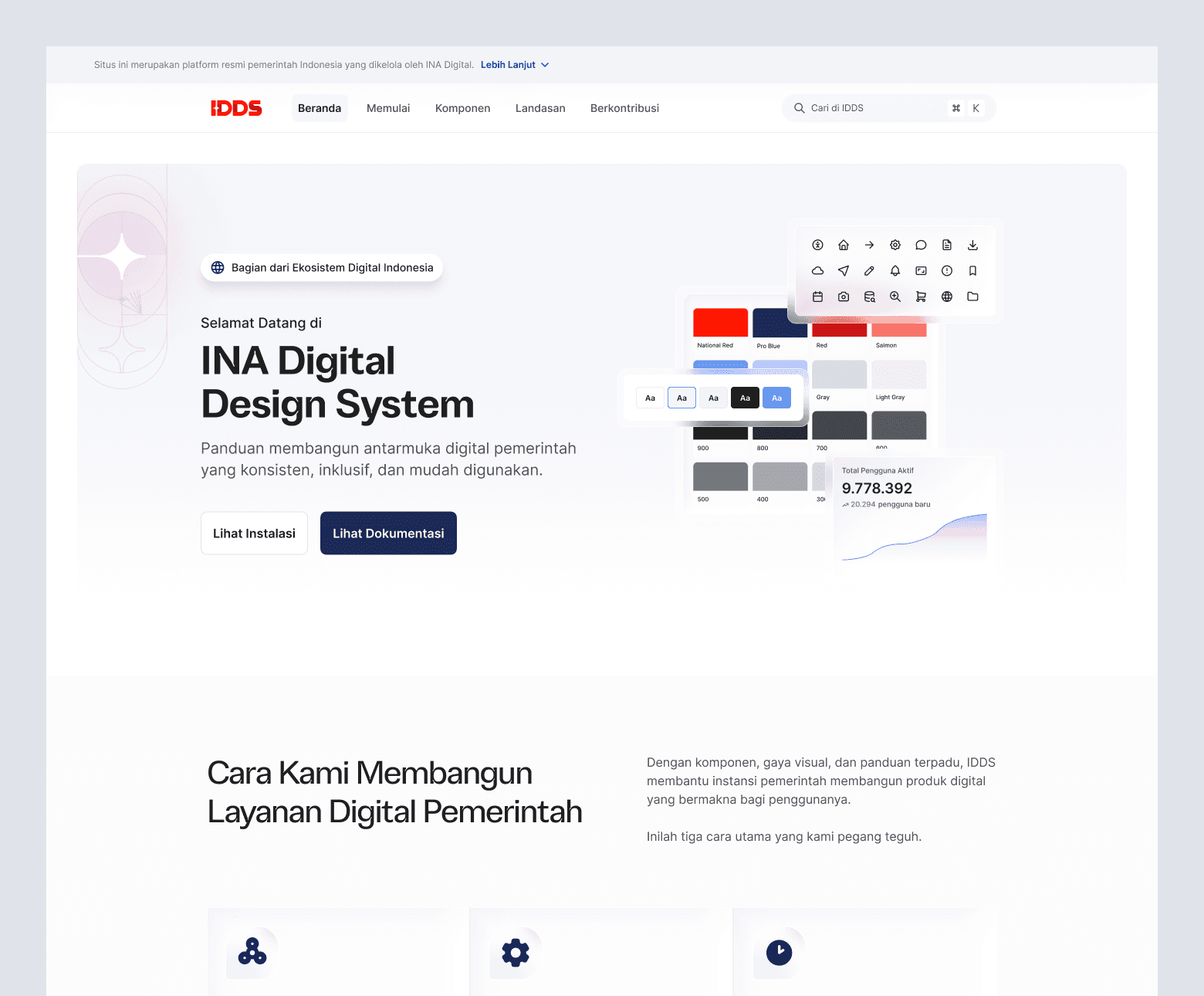
Delivered complete system: Foundations, 27 components, 15 patterns, illustration library, writing guidelines, and implementation guides.
Technical: Figma UI kit, NPM packages (React/Vue/JS+CSS), documentation site with live demos and theme switcher.
Unique approach: Tri-pillar evaluation framework (most systems only cover accessibility), built-in brand flexibility (unlike rigid UK Gov system), and multi-audience documentation for designers, developers, and writers.
Impact
Efficiency: Reduced development from 3 months to 2 months (33% faster), saving IDR 1 billion per project.
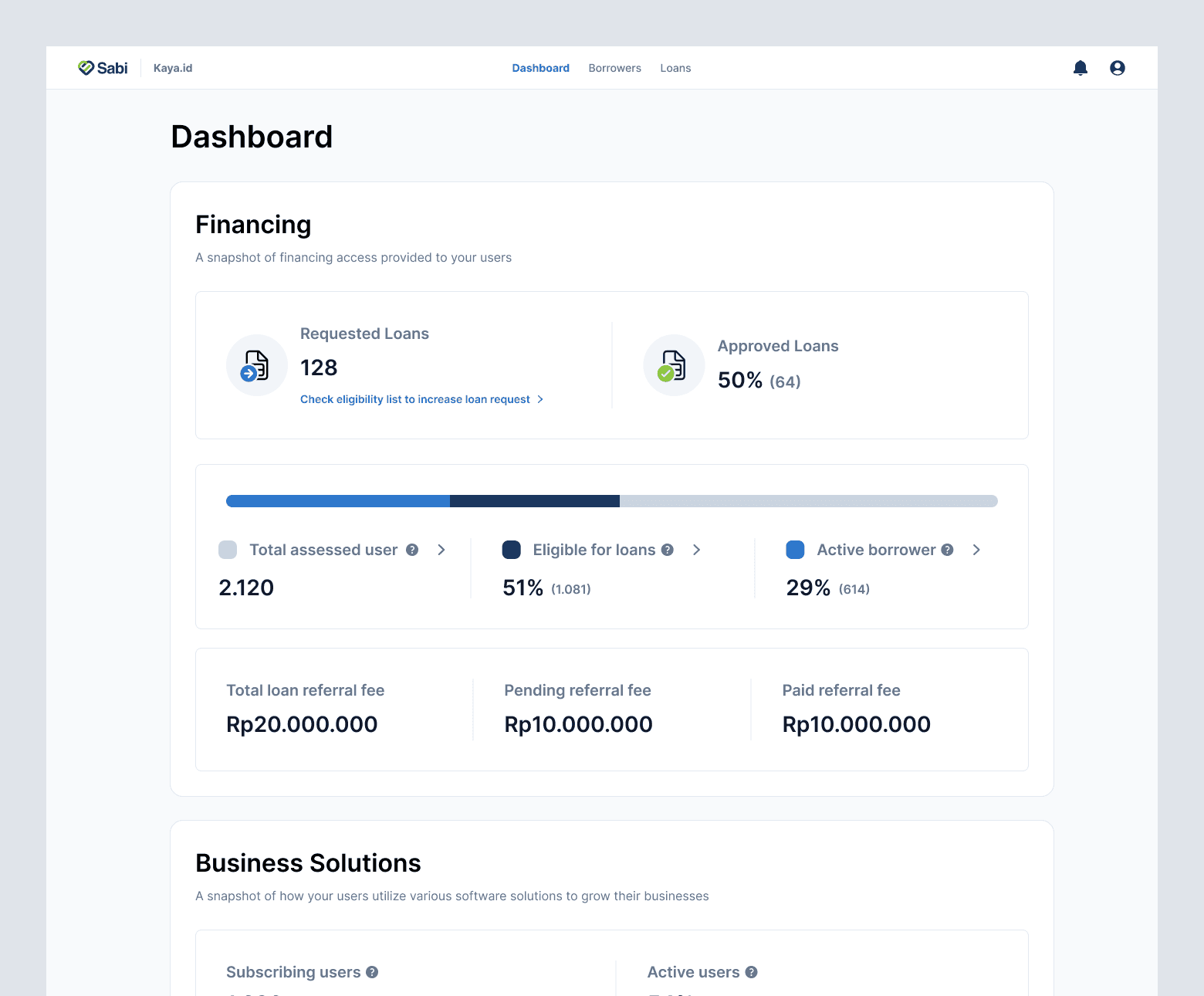
Adoption: 3 government bodies using it (KemenPANRB, BKN, LAN), with INAgov platform—operating system for all Indonesian civil servants—built entirely with the design system.
Quality: Products now meet WCAG accessibility standards by default with consistent, professional interfaces.
Strategic: Positioned Indonesia alongside UK, US, and Singapore with world-class government design infrastructure, with legal framework in progress to mandate national adoption.
Reflection
Challenge: Navigating government bureaucracy and unclear ownership—we built this as an initiative but later discovered KemenPANRB owned everything, creating commercial complications.
Learning: Should have addressed ownership and commercial terms upfront with leadership to ensure proper valuation of our work.
Pride moment: Mid-project, I handed off to a design lead using meticulously documented strategy and vision, transitioned to consultant role, and watched the team exceed stakeholder expectations independently.
Key lesson: Self-starting creates opportunities (we had the solution when KemenPANRB needed it), structure enables delegation (documentation allowed seamless handoff), and education is half the work in unfamiliar contexts (government moves differently than tech).